CEO-Level Product Strategy & Investment Case Study
Transforming a Global Gaming Platform into a Physical Entertainment Ecosystem
Interactive Entertainment | Theme Parks | Gaming | Creator Economy
An executive-level product strategy exploring how Roblox could transform its digital creator ecosystem into a multigenerational physical entertainment destination, integrating major attractions, gaming-native intellectual property, creator partnerships and new revenue streams.
Status: Independent Strategic Concept, Not an Announced Roblox Initiative
Company
Roblox Corporation
Proposed Product
Roblox World™
Role
CEO / Chief Product & Strategy Officer (Hypothetical)
Industry
Interactive Entertainment | Theme Parks | Gaming | Creator Economy
Strategic Horizon
2027–2035
Investment Classification
New Business Venture / Adjacent Market Expansion
Proposed Launch Market
Dallas–Fort Worth, Texas
Status
Independent Strategic Concept, Not an Announced Roblox Initiative
00
Executive summary
Executive Summary
The Investment Thesis
For decades, destination theme parks have monetized intellectual property originating in film, television and traditional entertainment.
Roblox represents a different category of intellectual property: interactive digital worlds in which users actively participate, create, socialize and develop persistent identities.
The strategic opportunity is to translate this engagement into a differentiated physical entertainment destination.
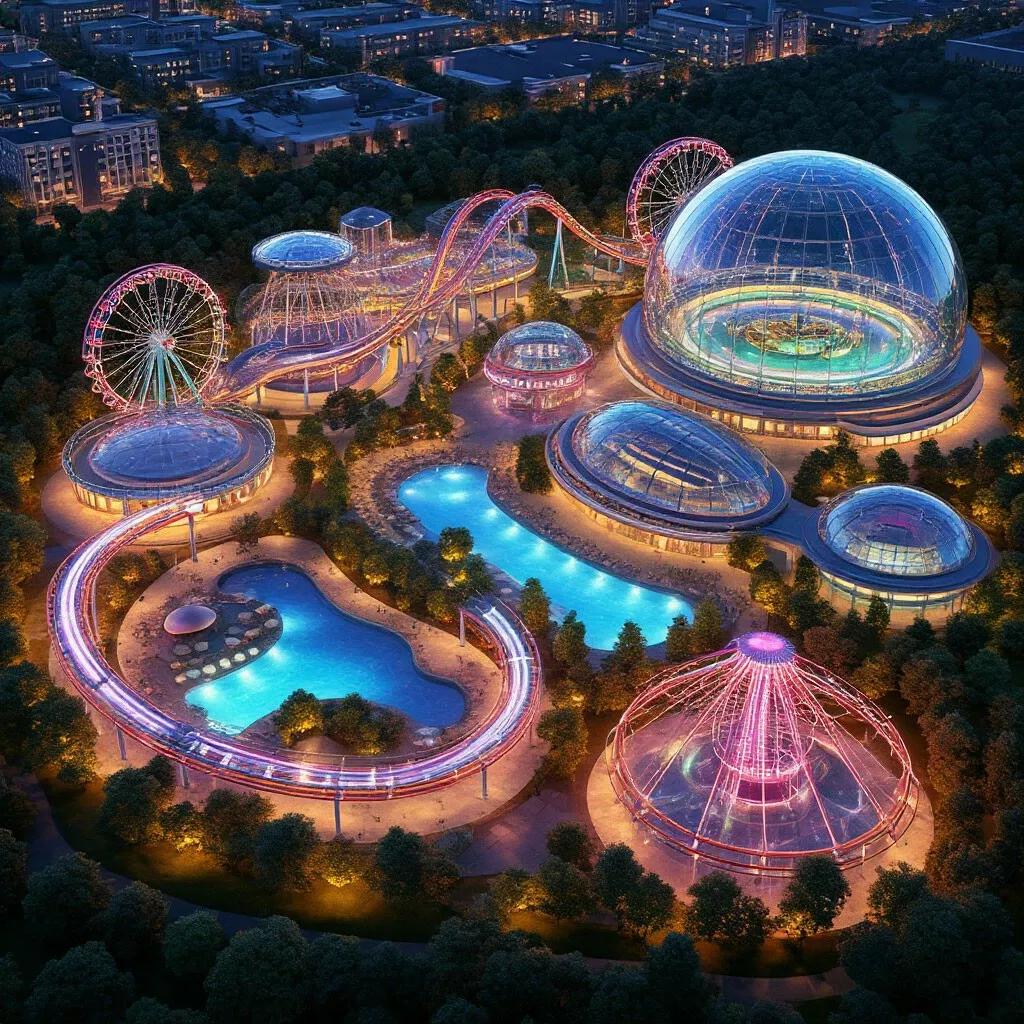
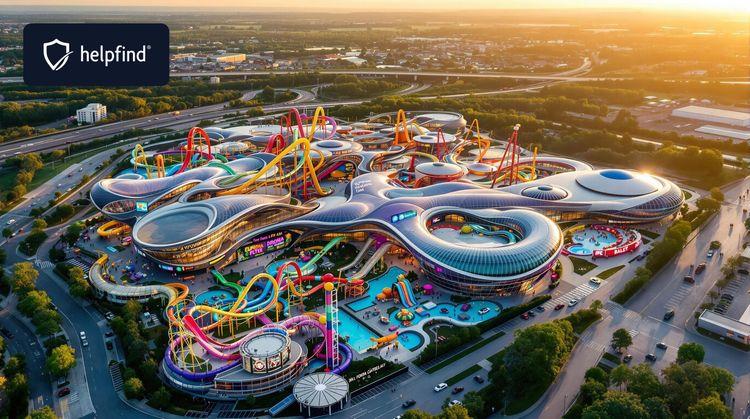
Roblox World™ is a proposed creator-powered theme park ecosystem combining traditional amusement attractions, immersive gaming experiences, physical merchandise, creator events and persistent digital engagement.
Unlike conventional theme parks built primarily around fixed intellectual property, Roblox World would incorporate an evolving portfolio of creator-developed experiences.
The destination would feature major roller coasters, water attractions, competitive racing, family entertainment, Roblox-inspired environments and licensed experiences based on popular games.
A digital identity layer would connect physical visits to the broader Roblox platform, enabling personalized challenges, achievements and eligible digital rewards.
The proposed business would generate revenue through admission, food and beverage, merchandise, special events, hospitality partnerships and creator-driven commercial programs.
Strategic Recommendation
Proceed with a stage-gated investment strategy, beginning with feasibility validation in the Dallas–Fort Worth metropolitan area.
The company should not authorize full-scale development until customer demand, intellectual-property agreements, capital requirements, site feasibility and projected returns have been independently validated.
Proposed Strategic Objectives
Objective
Business outcome
Expand beyond digital entertainment
Establish a new physical entertainment revenue channel
Deepen customer relationships
Connect online engagement with physical experiences
Extend creator monetization
Introduce licensing, merchandise and location-based experiences
Build long-term brand relevance
Establish Roblox as a multigenerational entertainment brand
Diversify revenue
Reduce reliance on a single entertainment format
Increase ecosystem engagement
Strengthen connections between physical and digital participation
01
Section 1
Strategic Context & Market Opportunity
1.1 The Generational Shift in Entertainment
Traditional theme parks were largely developed around characters and stories audiences experienced through movies, television and books.
Roblox operates through a fundamentally different entertainment model.
Users are not simply consuming stories. They participate in interactive environments, build social relationships, customize identities and create experiences.
This distinction creates an opportunity to develop a new form of destination entertainment.
Core Customer Insight
For previous generations, entertainment destinations brought favorite stories to life. For younger gaming generations, the opportunity is to bring their favorite playable worlds into reality.
The hypothesis is that Gen Z and Gen Alpha may develop strong emotional connections to interactive gaming environments because those experiences are participatory and socially meaningful.
This does not imply that traditional entertainment brands have lost relevance. Rather, it suggests that gaming-native intellectual property could support an additional category of physical destination entertainment.
Market Opportunity Hypothesis
Roblox World would target the intersection of three markets:
Theme Parks & Attractions
Demand for destination entertainment, physical attractions and family recreation.
Gaming & Interactive Entertainment
Established consumer familiarity with digital environments, gaming mechanics and virtual identities.
Creator Economy & Licensed Merchandise
Commercial opportunities associated with creator-developed experiences, recognizable characters and physical collectibles.
The opportunity is not simply to enter the theme park industry.
It is to establish a physical distribution and monetization platform for gaming-native entertainment.
02
Section 2
Customer Problem & Opportunity Definition
2.1 Customer Segments
Segment
Primary need
Strategic relevance
Families with children ages 6–12
Shared entertainment, safety, value
Primary admission purchasing audience
Teens ages 13–17
Thrills, gaming, social experiences
High brand affinity and influence
Young adults ages 18–29
Nostalgia, competitive entertainment, events
Extended customer lifecycle
Roblox creators
Audience expansion and monetization
Content and IP supply
Destination tourists
Distinctive attractions and experiences
Incremental market reach
These segments are hypotheses to validate through customer research, rather than confirmed demand forecasts.
2.2 Jobs to Be Done
Functional Job
Provide a destination where families and friends can experience recognizable Roblox-inspired worlds through physical attractions and interactive entertainment.
Emotional Job
Allow players to experience the excitement of entering environments and interacting with characters they previously encountered digitally.
Social Job
Create opportunities for friends, families and gaming communities to participate in shared experiences, competitions and special events.
Creator Job
Enable selected creators to extend their intellectual property into physical attractions, merchandise and live entertainment.
2.3 Unmet Needs
The product strategy addresses four potential gaps:
1.Limited integration between persistent gaming identities and physical entertainment.
2.Few large-scale destination attractions built around user-generated gaming ecosystems.
3.Limited opportunities for independent game creators to commercialize physical attractions.
4.Traditional attractions that cannot easily refresh their content without major redevelopment.
These gaps require validation against current competitor offerings and consumer preferences.
03
Section 3
Product Vision & Value Proposition
3.1 Product Vision
Vision
Create the world's leading physical entertainment destination where gaming communities can experience, explore and influence the worlds they love.
3.2 Product Positioning
Roblox World™: Your Games. Your Adventures. Your World.
Roblox World would combine the physical excitement of major theme parks with the creativity, social interaction and evolving content associated with Roblox.
Differentiation Framework
Dimension
Conventional theme park model
Roblox World proposition
Core entertainment
Predominantly licensed or owned IP
Curated creator and platform IP
Attractions
Physical rides and themed experiences
Physical rides plus interactive gameplay
Content development
Primarily centralized
Centrally operated with creator participation
Digital identity
Often visit-specific
Connected to persistent Roblox identity
Merchandise
Character and franchise products
Game-linked collectibles and personalized products
Community
Visitor participation
Existing digital communities plus physical events
Content refresh
Capital-intensive attraction updates
Combination of physical investment and digital content updates
Roblox World would not eliminate the need for major physical investment.
Its advantage would be the ability to refresh selected digital experiences and activate existing creator communities without rebuilding every attraction.
04
Section 4
Product Architecture & Experience Design
The proposed flagship would consist of five primary entertainment districts, supported by retail, dining, event facilities and digital infrastructure.
4.1 Destination Master Plan
District 1
Roblox ThrillVerse™
Positioning
High-energy attractions for teens, families and thrill-seeking adults.
Strategic Purpose
Establish Roblox World as a legitimate theme park rather than a gaming exhibition or arcade.
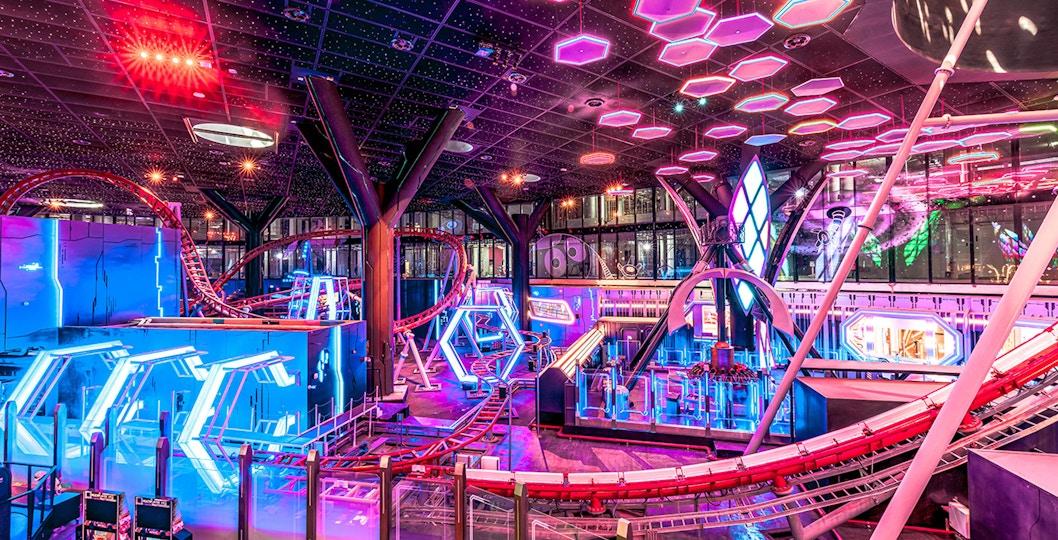
Major roller coasters are essential to the destination's positioning and admission value.
Proposed Attractions
Obby-inspired high-speed roller coaster.
Multi-launch coaster featuring changing digital environments.
Vertical drop tower.
Physical obstacle-course challenges.
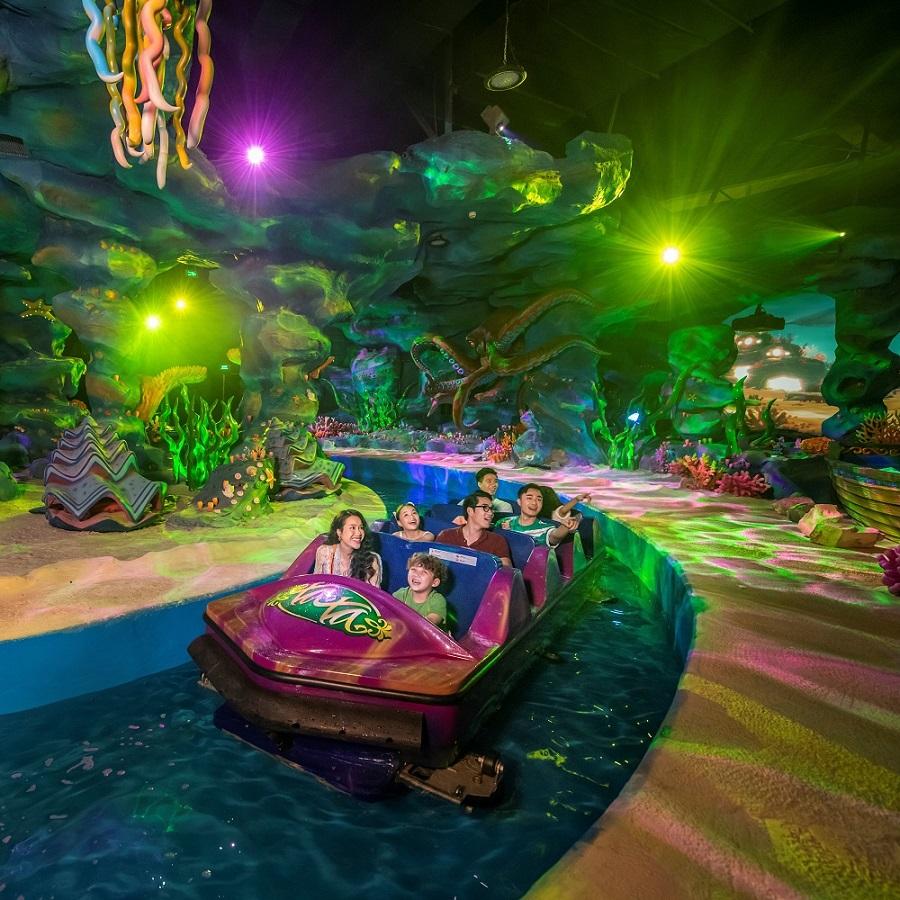
Immersive indoor adventure ride.
District 2
Roblox AquaVerse™
Positioning
Water-based entertainment and family recreation.
Strategic Purpose
Increase family appeal, expand the duration of visits and provide a separate or bundled admission opportunity.
AquaVerse would require a dedicated feasibility assessment covering water availability, treatment systems, operational costs, climate and regulatory requirements.
Proposed Attractions
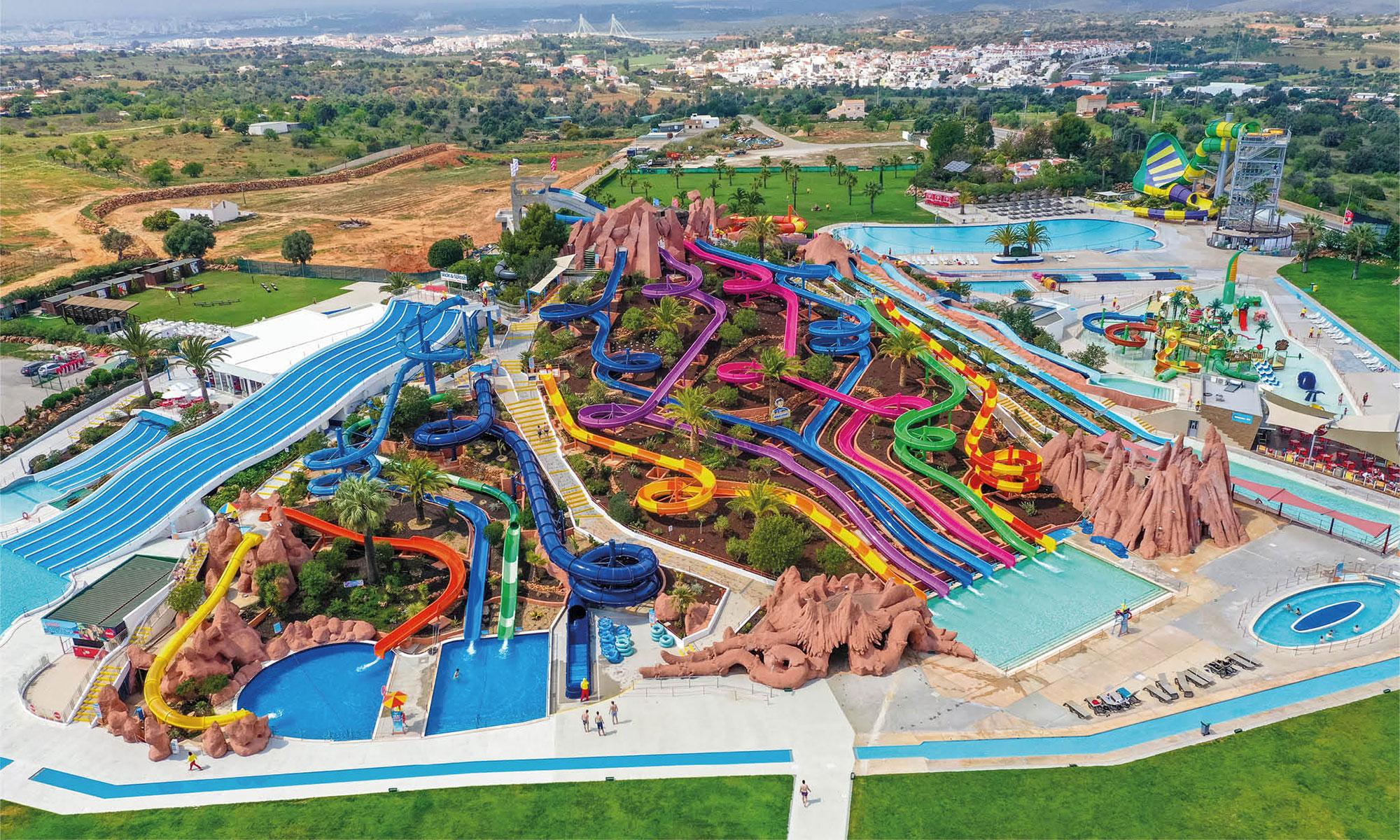
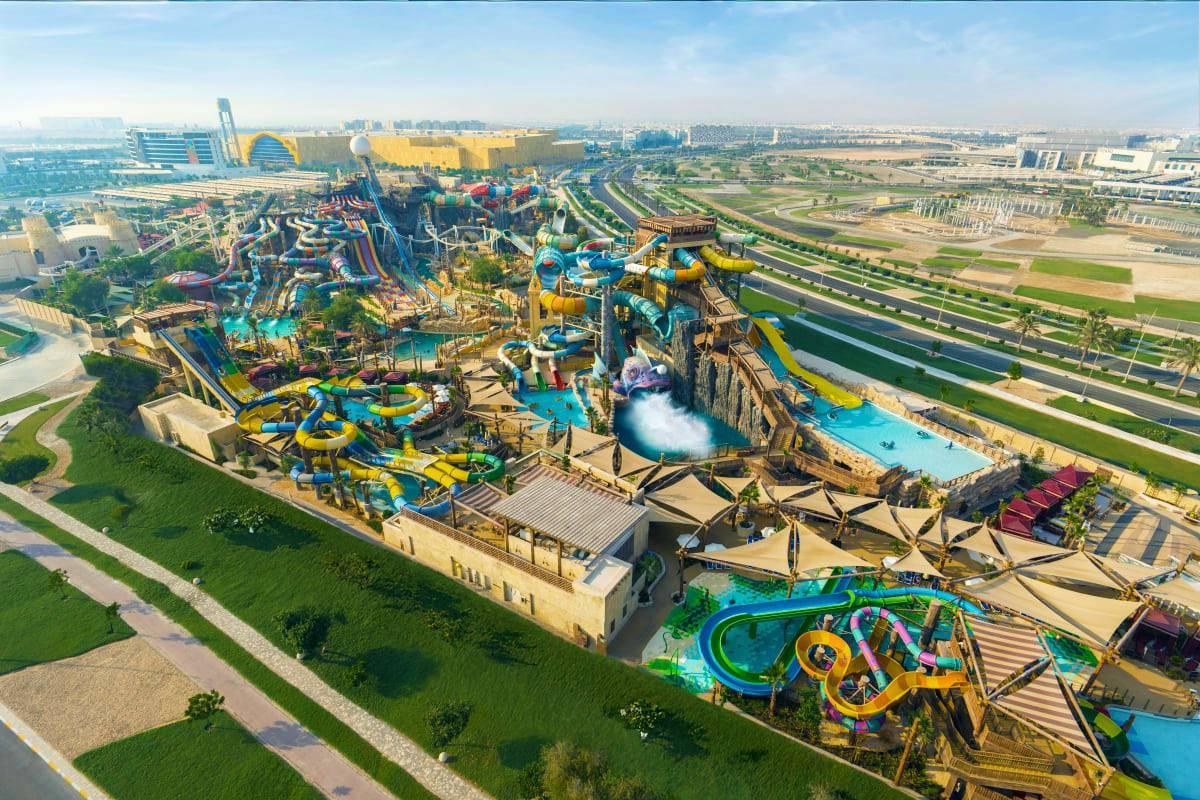
High-speed water slides.
Family raft attractions.
Interactive water obstacle courses.
Wave pool.
Lazy river.
Children's splash environments.
District 3
Roblox Racing World™
Positioning
Competitive driving and interactive racing experiences.
Strategic Purpose
Provide repeatable, skill-based entertainment that supports tournaments and ongoing engagement.
Proposed Attractions
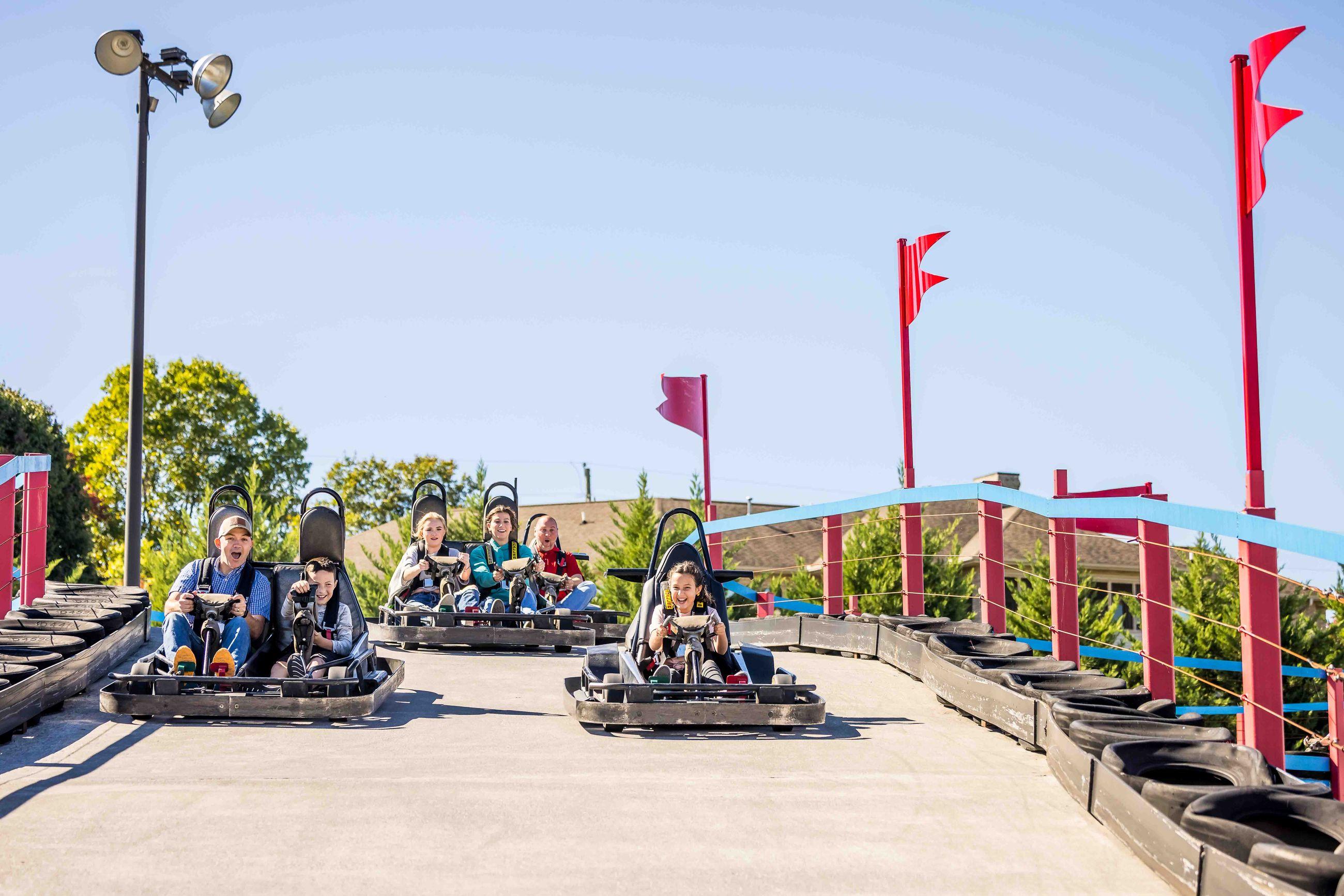
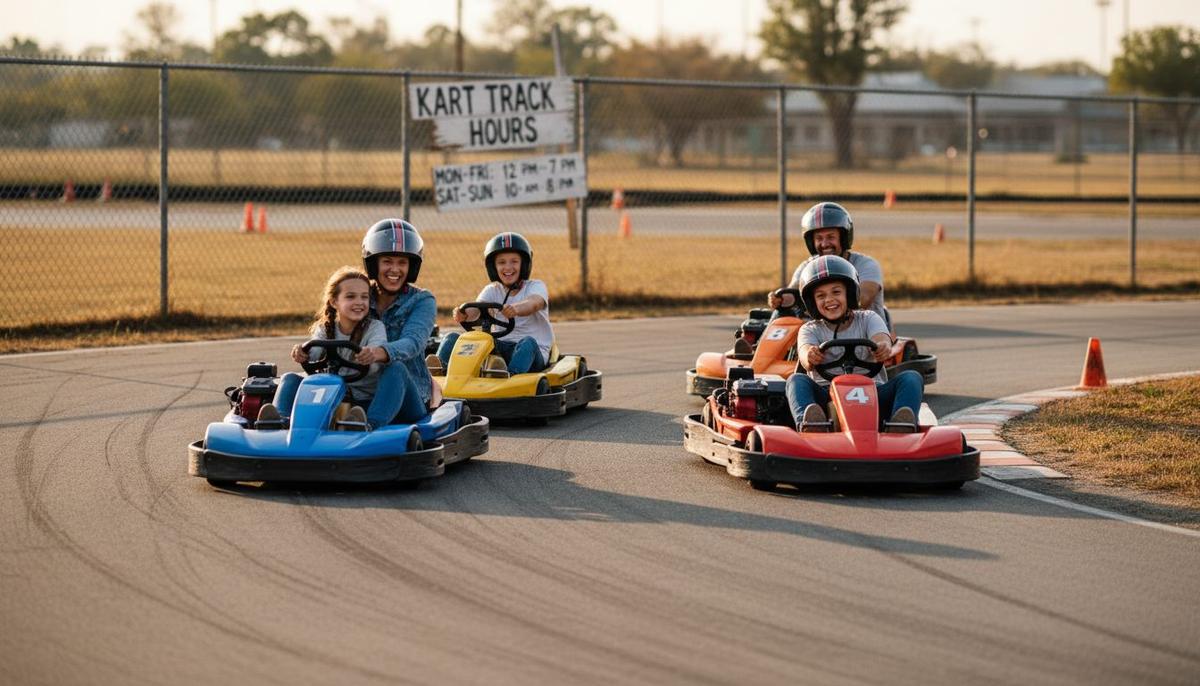
Electric go-kart racing circuits.
Junior driving experiences.
Racing simulators.
Team-based racing competitions.
Seasonal racing championships.
District 4
Adopt Me! Kingdom™
Positioning
Family attractions, character experiences and merchandise.
Strategic Purpose
Create a high-affinity family destination with strong merchandise potential.
This district would require formal licensing and commercial agreements with the relevant intellectual-property holders.
Proposed Attractions
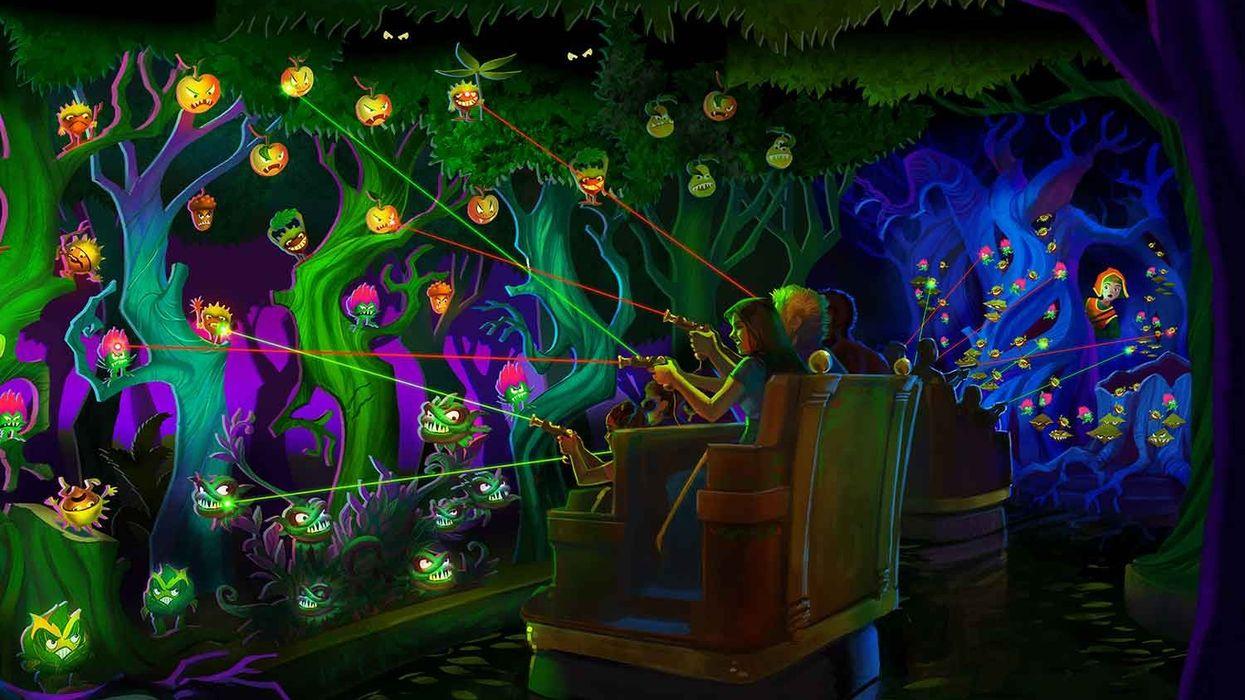
Adopt Me!-themed interactive dark ride.
Pet discovery adventure.
Family-friendly rides.
Pet adoption experience.
Character meet-and-greet environments.
District 5
CreatorVerse™
Positioning
Continuously evolving experiences developed in collaboration with Roblox creators.
Strategic Purpose
Create differentiation through an evolving entertainment portfolio.
Rather than permanently committing every attraction to a specific game, selected venues would use modular infrastructure capable of supporting multiple licensed experiences.
Proposed Experiences
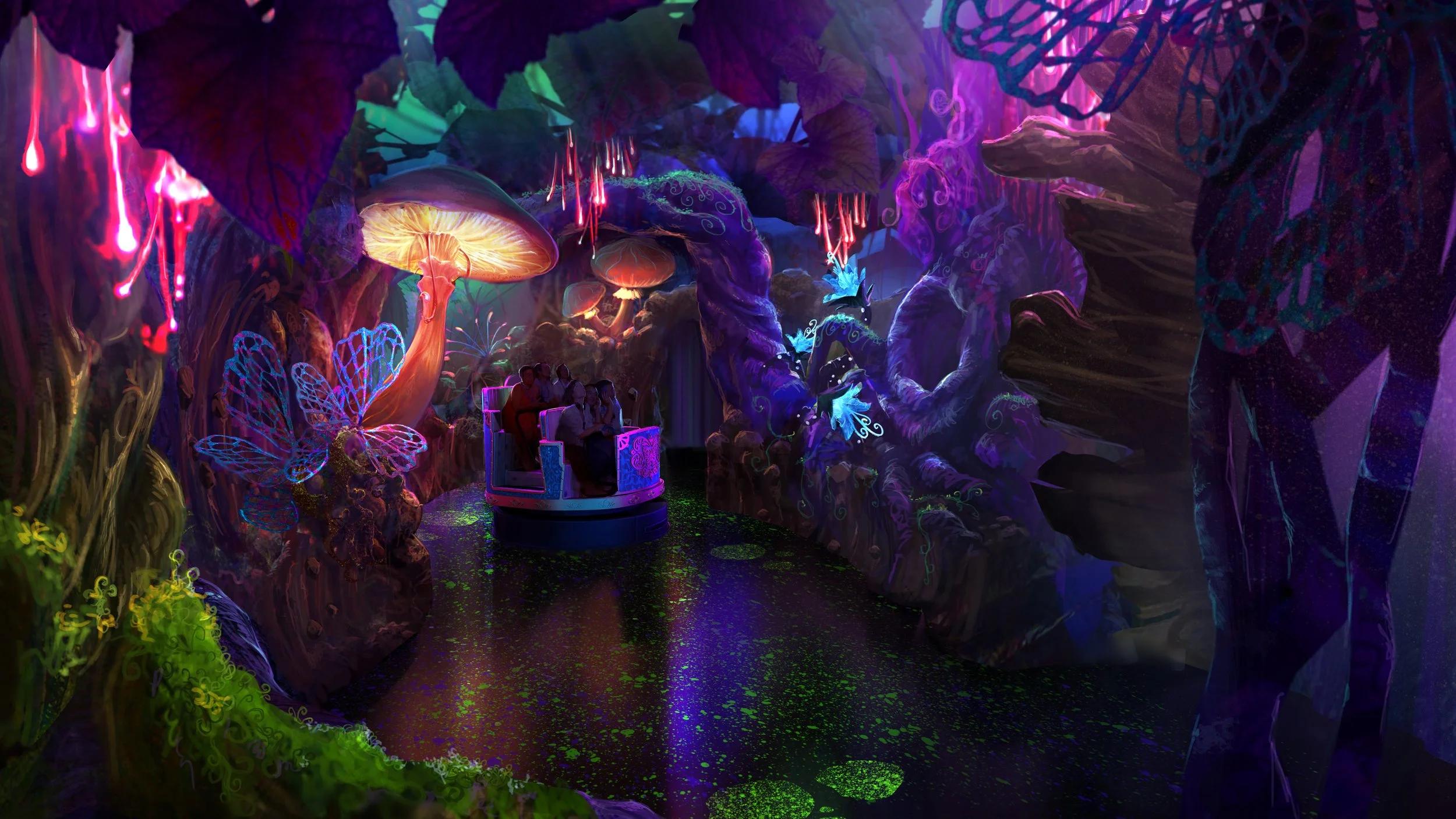
Rotating creator-inspired attractions.
Interactive missions.
Creator meet-and-greets.
Competitive gaming events.
Limited-time immersive installations.
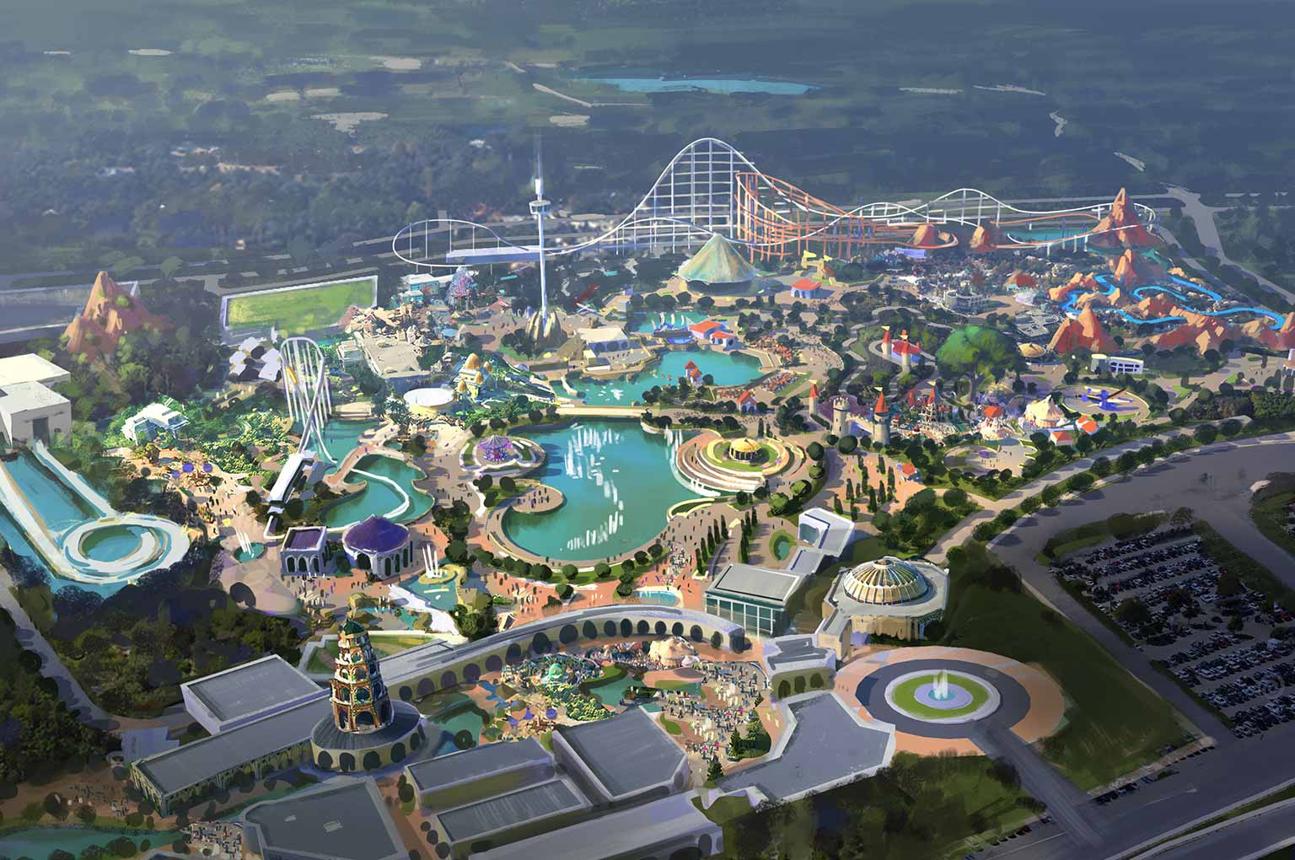
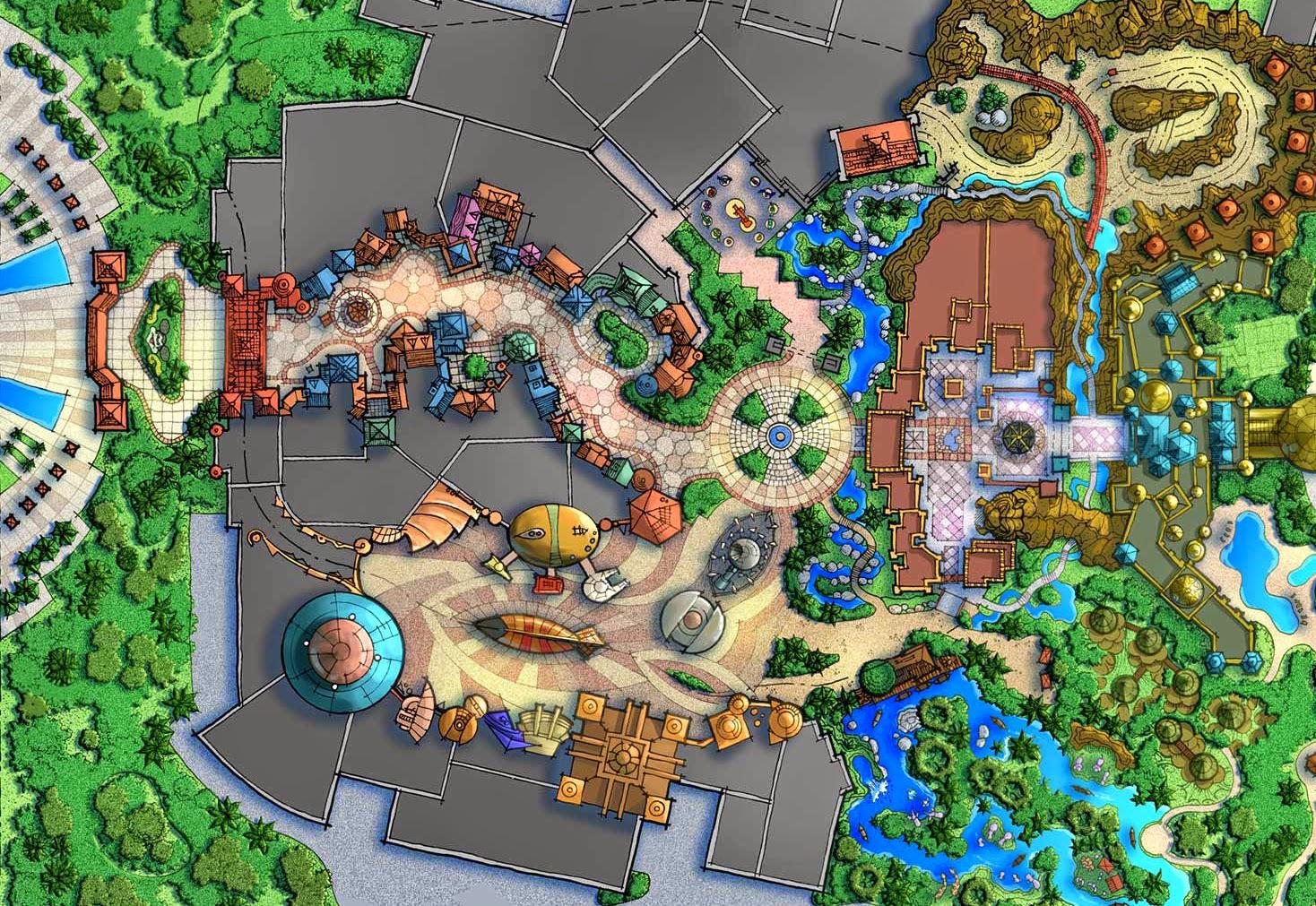
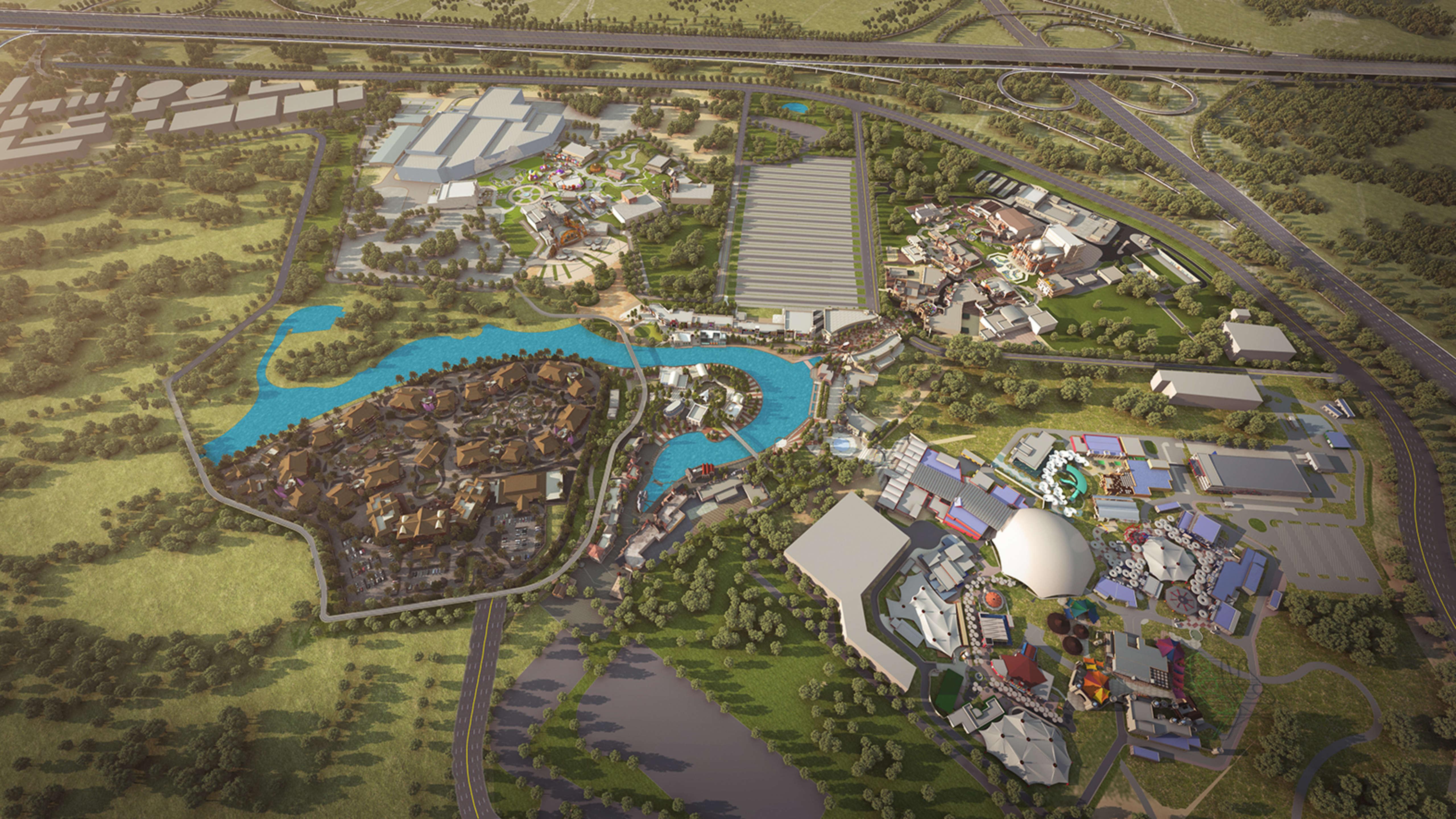
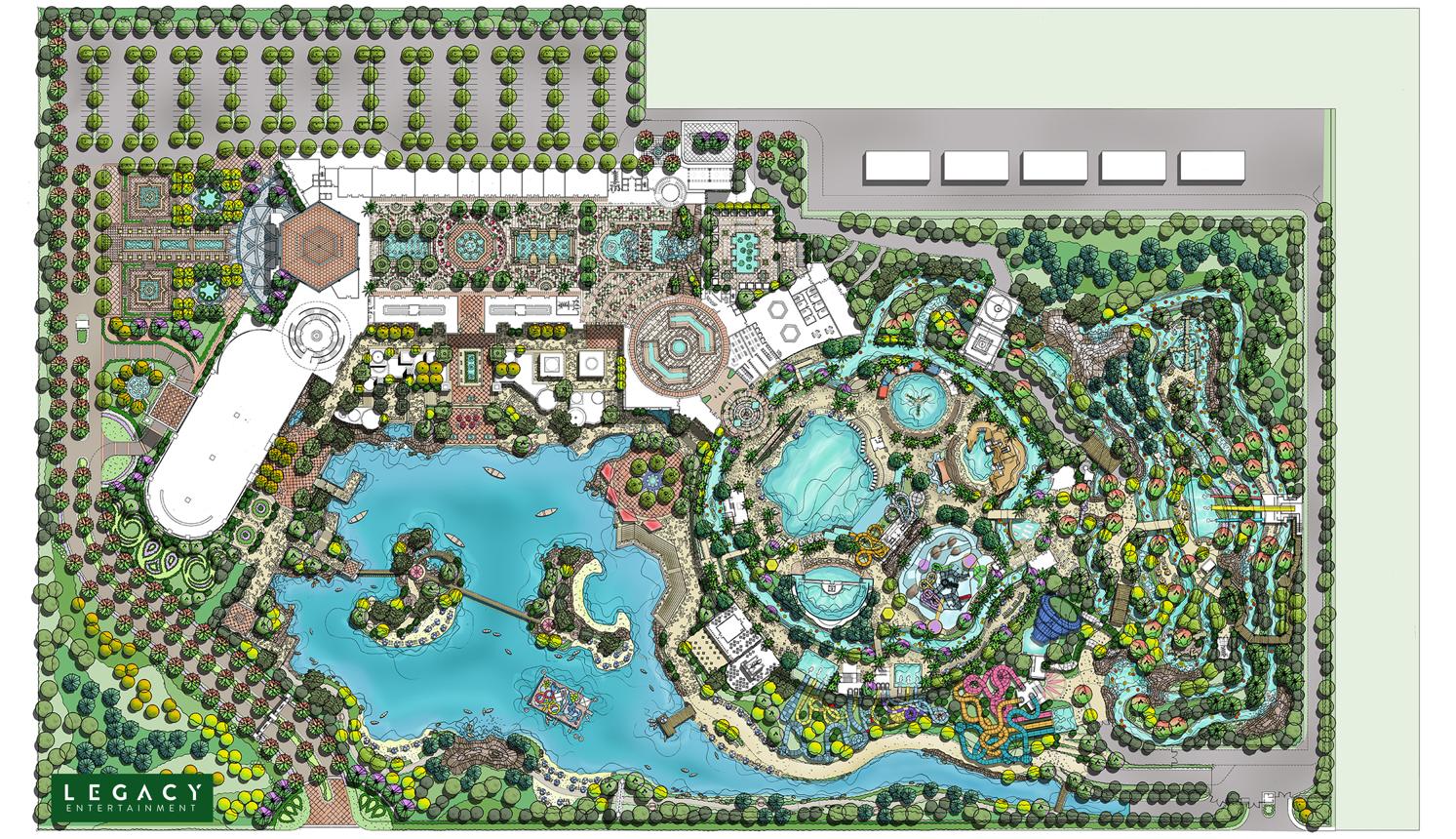
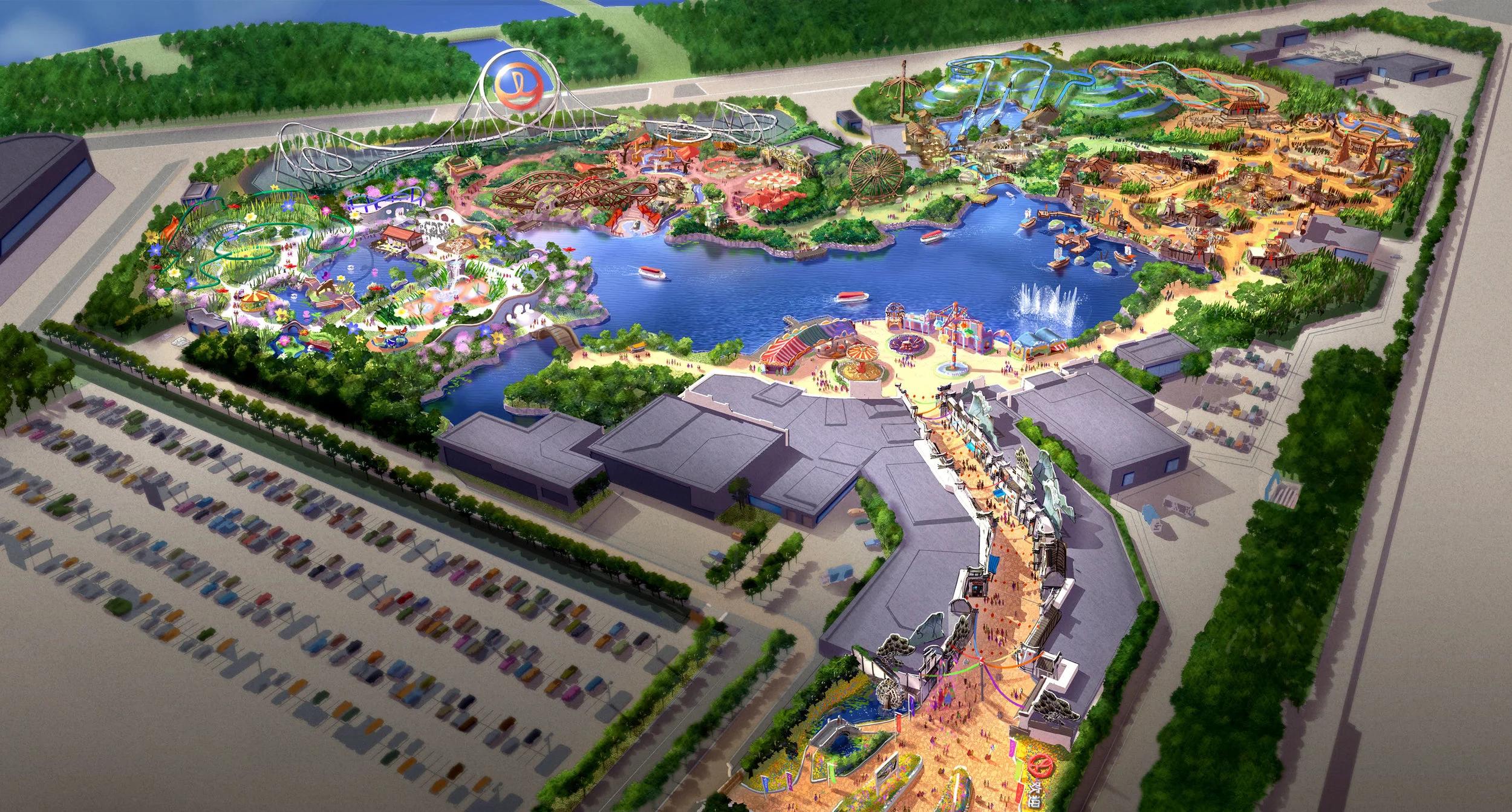
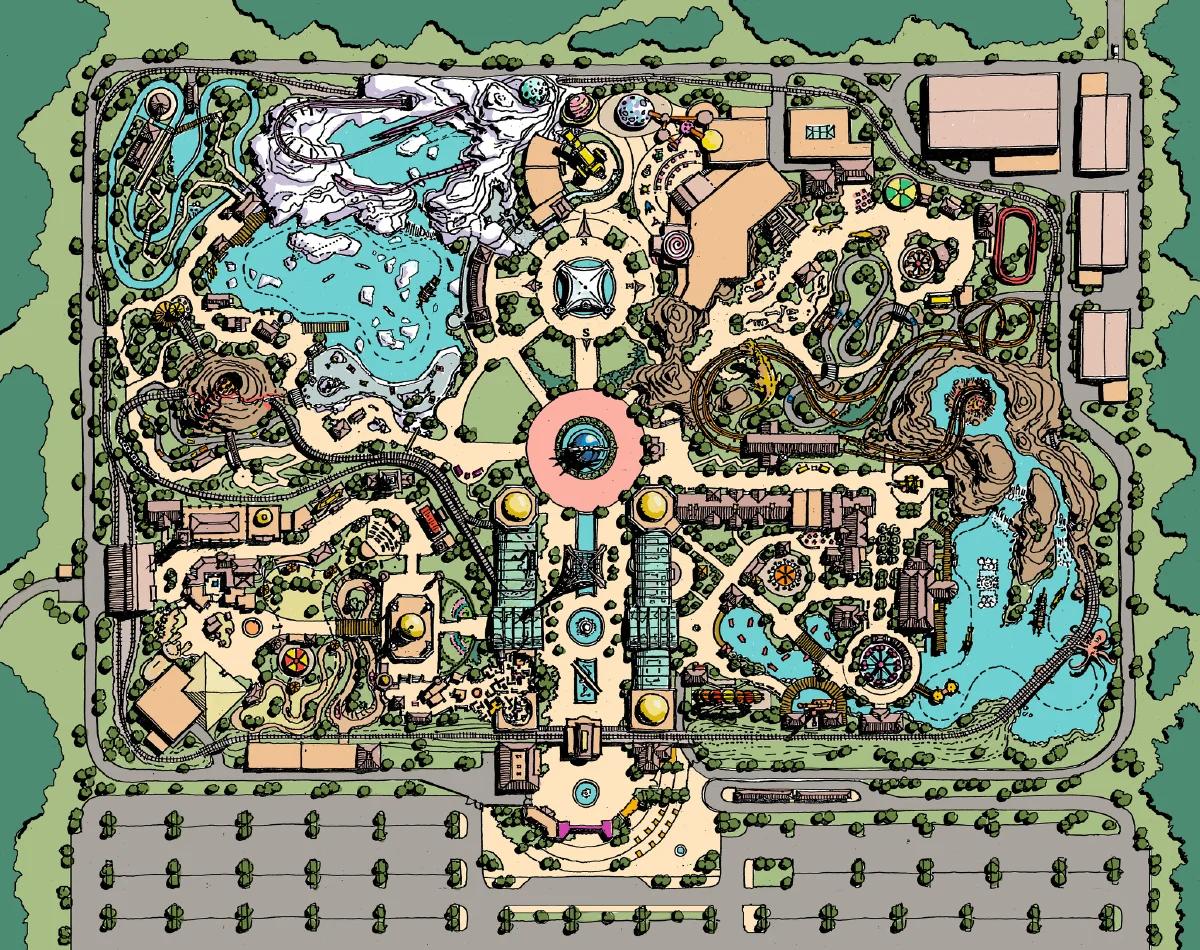
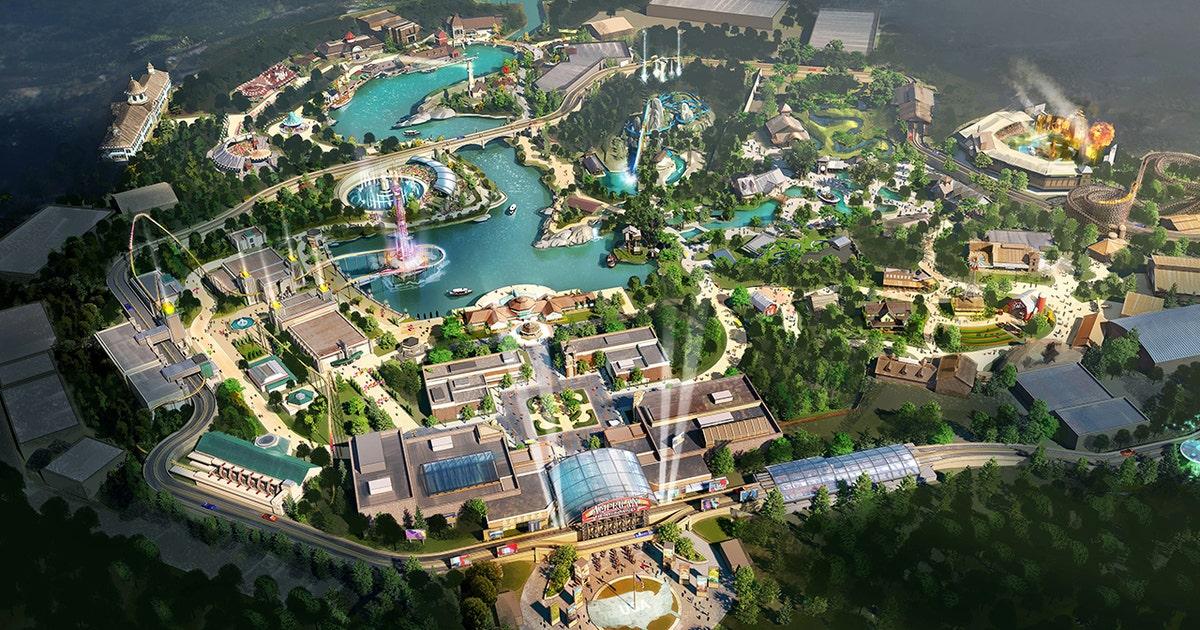
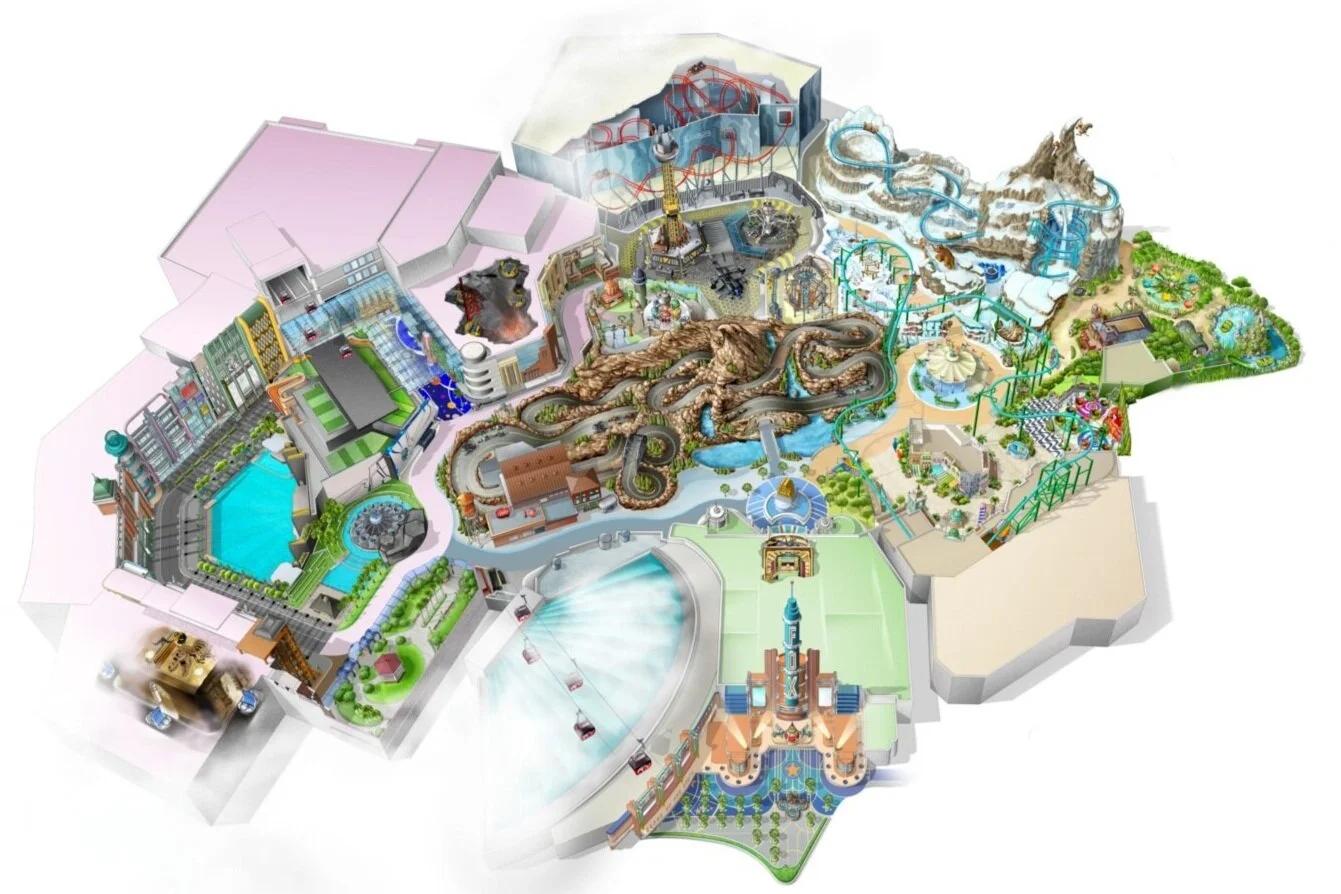
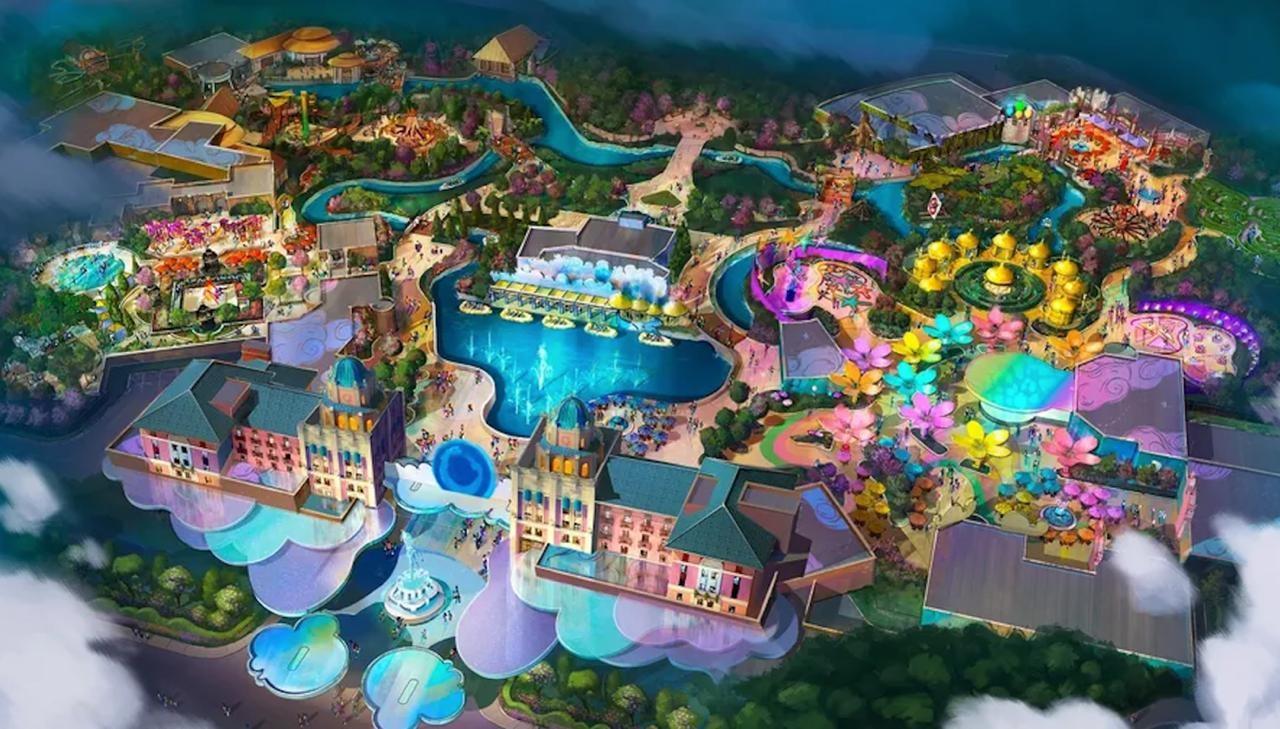
4.2 Conceptual Master Plan · Visual 5
Zone A ThrillVerse, Zone B AquaVerse, Zone C Racing World, Zone D Adopt Me! Kingdom, Zone E CreatorVerse and Zone F retail, dining and events, shown alongside the main entrance, pedestrian circulation, parking, transportation access and expansion areas.
Conceptual master plan studies only. Each renders shows the intended spatial logic — six themed zones around a central hub, a main entrance, pedestrian circulation, parking, transportation access and retained expansion areas — and is not an engineering or architectural site plan.
Product showcase · Visual 8
Signature Attractions
Four attractions carry the proposition: one marquee coaster, one water destination, one competitive circuit and one rotating creator platform.
Zone A · ThrillVerse
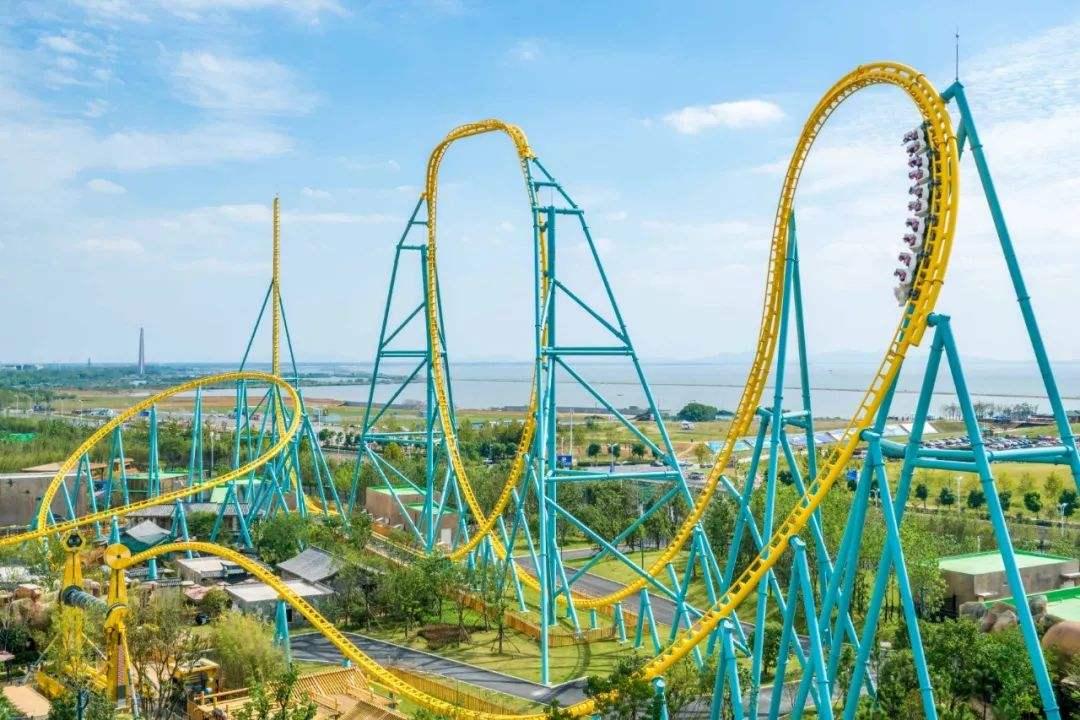
Obby Coaster
Major roller coaster
A coaster built like a playable obstacle course: near misses and timed gates make each lap feel like a run worth repeating. It is the park's most recognizable silhouette and the anchor of ThrillVerse.
Zone B · AquaVerse
AquaVerse
Water slides and wave pool
Guests move from open lagoon to high-speed slide tower to wave pool without leaving the themed zone. It gives families a full-day reason to stay and the park a second gate with its own admission.
Zone C · Racing World
Blox Racing
Competitive electric go-kart circuit
Riders race real karts on a ranked circuit, with lap times carried into their park profile. Competition turns a short ride into a repeatable session that guests queue for again.
Zone E · CreatorVerse
CreatorVerse
Interactive gaming attraction
Guests step inside a rotating set of creator-built worlds that change each season. It is the park's living content engine, so the lineup refreshes without rebuilding structures.
05
Section 5
Digital Integration Strategy
5.1 Roblox WorldSync™
WorldSync would connect eligible physical park activities with the Roblox platform.
The objective is to create continuity between digital and physical entertainment without making account connection mandatory for admission.
Core Capabilities
Capability
Description
Digital identity
Optional Roblox account integration
WorldBand
Park wearable for attraction interactions
Mission tracking
Personalized quests and achievements
Digital collectibles
Eligible rewards connected to park experiences
Family accounts
Parent-managed participation and permissions
Creator events
Physical and virtual event integration
Park companion
Navigation, reservations and experience discovery
5.2 Safety and Privacy Requirements
Because Roblox serves younger audiences, the product must implement child protection as a foundational requirement.
Core principles would include:
Age-appropriate experiences.
Verifiable parental consent where required.
Data minimization.
Limited retention of location and activity data.
No public disclosure of children's real-time park locations.
Moderated creator interactions.
Clear separation between digital gameplay and physical ride-control systems.
Participation in WorldSync would remain optional.
Guests who do not connect Roblox accounts would still have access to the park's core attractions.
06
Section 6
Creator Economy & Influencer Strategy
Roblox World would establish a formal licensing and partnership program for selected Roblox creators.
6.1 Creator Partnership Model
The program could include:
Attraction Licensing
Creators receive negotiated compensation for authorized use of their experiences.
Merchandise Licensing
Creators participate in commercial programs involving physical collectibles and branded products.
Special Events
Creators host scheduled appearances, gaming competitions and themed entertainment.
Seasonal Content
Selected creator experiences rotate through configurable park environments.
Example: CreatorFest™
A quarterly event could feature established Roblox personalities such as IamSanna, subject to commercial agreements.
Programming could include:
Live competitions.Creator meet-and-greets.Exclusive attractions.Limited-edition merchandise.Community challenges.
Strategic Value
Creator events would serve three purposes simultaneously:
Acquisition
Reach existing creator audiences.
Engagement
Provide unique experiences that motivate visits.
Monetization
Generate incremental event, merchandise and hospitality revenue.
The business must not assume that influencer follower counts translate directly into ticket sales. Event economics should be validated through advance purchases, customer research and pilot programming.
07
Section 7
Merchandise & Retail Strategy
7.1 Commercial Opportunity
Roblox World would operate dedicated retail environments featuring licensed gaming merchandise.
The primary objective is to convert recognizable digital characters and collectibles into physical products.
Flagship Retail Concept: Adopt Me! Pet Emporium™
Proposed merchandise categories:
Category
Product concept
Plush collectibles
Popular Adopt Me! pets
Squishy toys
Soft, collectible pet characters
Premium collectibles
Large-format and limited-edition plush
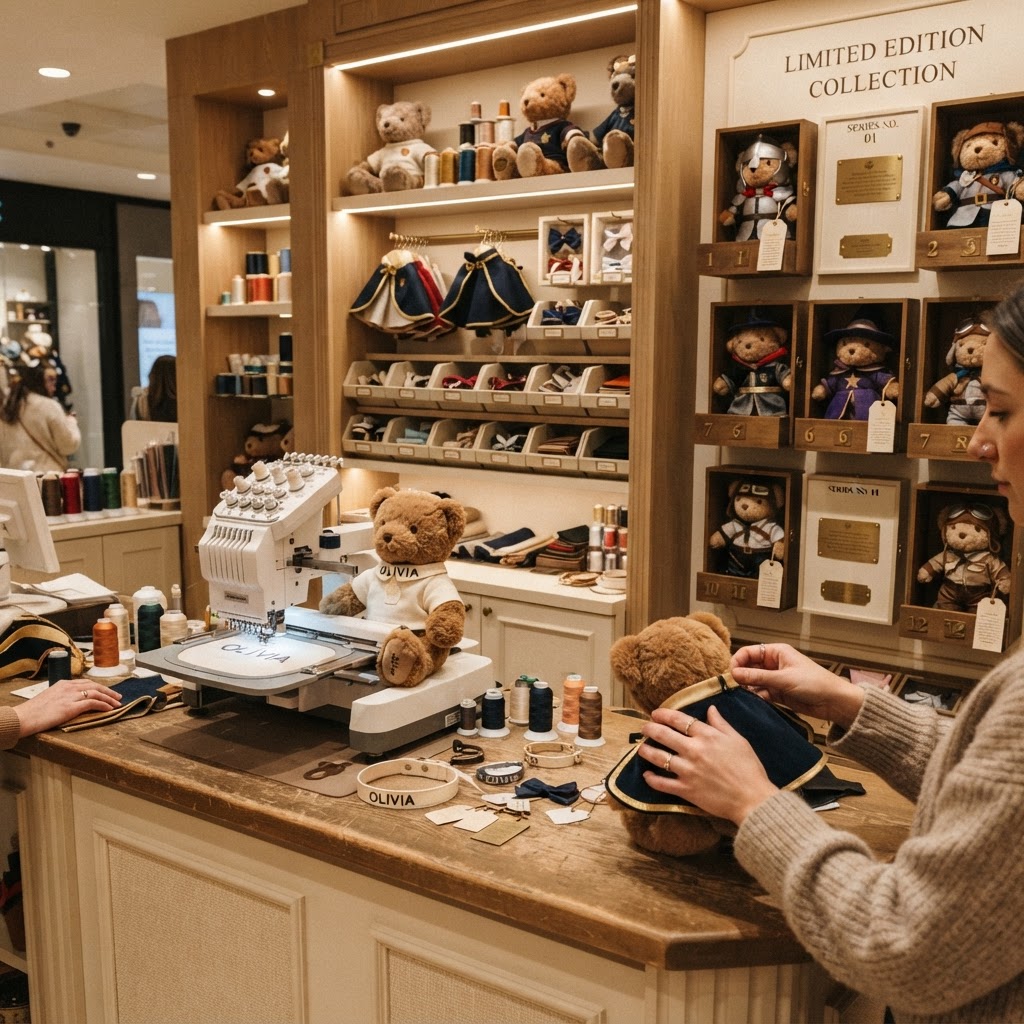
Personalized merchandise
Pet accessories and custom tags
Apparel
Game-inspired clothing
Digital bundles
Eligible physical products with digital rewards
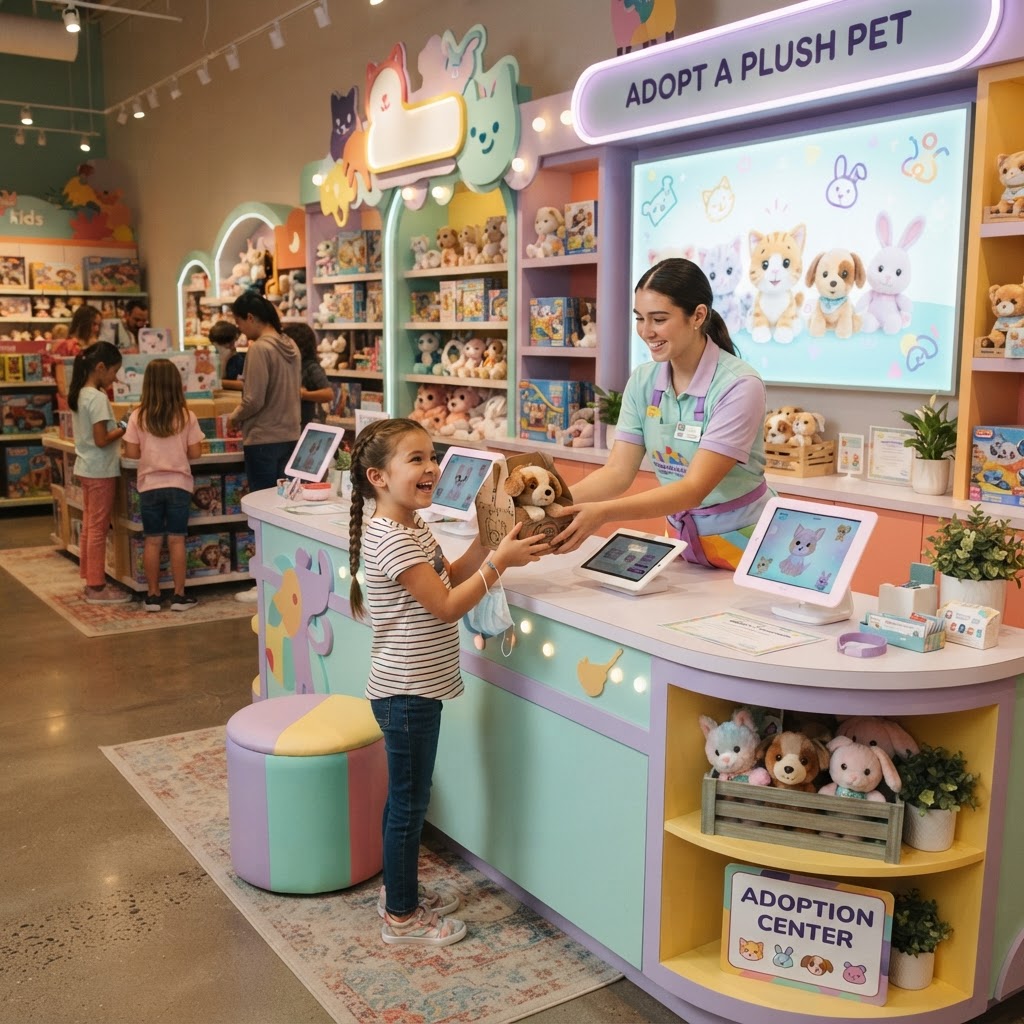
Signature Experience: Physical Pet Adoption
Visitors select a licensed plush pet, personalize its name and receive an adoption certificate.
The experience could include optional digital features, subject to appropriate platform integration and licensing.
Merchandise Strategy
The strongest retail opportunity is not simply selling branded products.
It is creating physical ownership experiences linked to characters that customers already recognize and value.
However, merchandise revenue forecasts must account for licensing royalties, manufacturing costs, inventory risk and retail operating expenses.
08
Section 8
Location Strategy & Site Selection
8.1 Evaluation Framework
The proposed site selection process would assess:
Local and regional family demand
25%
Destination tourism potential
20%
Land and infrastructure feasibility
20%
Transportation and airport access
15%
Climate and operating season
10%
Competitive environment
10%
Total100%
8.2 Candidate Markets
Dallas–Fort Worth, Texas
Primary investment candidate
Advantages include a large metropolitan customer base, regional population growth, major airports and potential access to development sites outside the urban core.
The market could support both local repeat visitation and destination travel.
Risks include competition, summer heat and the cost of acquiring and developing a suitable site.
Las Vegas, Nevada
Secondary investment candidate
Advantages include extensive hospitality infrastructure, established tourism and strong event-hosting capabilities.
Risks include extreme summer temperatures, water constraints and uncertainty regarding demand from families with Roblox-age children.
Orlando, Florida
Destination tourism alternative
Advantages include a mature theme park market, established visitor demand and extensive hospitality infrastructure.
Risks include competition with major entertainment operators, site costs and potentially high customer acquisition expenses.
Sacramento, California
Regional development alternative
Advantages include Northern California population access and potential repeat visitation.
Risks include California development costs, regulatory complexity and a smaller established destination tourism market.
8.3 Preliminary Recommendation
Prioritize Dallas–Fort Worth for detailed feasibility assessment.
The preferred search area would include suitable development corridors in North Texas, rather than restricting the search to Dallas city limits.
Las Vegas should remain the principal alternative.
No final site selection should occur before independent analysis of:
Land acquisition and zoning.
Environmental and infrastructure requirements.
Construction costs.
Family demand and willingness to pay.
Competitive supply.
Transportation access.
Projected financial returns.
09
Section 9
Business Model & Revenue Architecture
9.1 Revenue Strategy
Roblox World would operate as a diversified destination entertainment business rather than relying exclusively on admission revenue.
The business model would consist of six revenue streams.
Revenue stream
Monetization mechanism
Strategic importance
Theme park admission
Single-day and multiday tickets
Primary revenue driver
Water park admission
Separate or bundled admission
Incremental revenue and visit extension
Food and beverage
Restaurants, quick service and themed dining
Revenue per visitor
Merchandise
Licensed plush, collectibles and apparel
High-potential ancillary revenue
Creator events
Special admission, VIP packages and sponsorship
Repeat visitation
Hospitality
Hotel partnerships and vacation packages
Destination market expansion
Longer-term opportunities could include corporate events, educational programs, licensing agreements and additional park locations.
9.2 Pricing Architecture
The pricing strategy should balance accessibility, perceived value, demand management and profitability.
The following figures are illustrative hypotheses, not validated market prices.
Product
Proposed price
Single-day theme park admission
$69–$99
Single-day water park admission
$39–$59
Combined admission
$99–$129
Two-day combination ticket
$149–$189
Annual theme park pass
$199–$299
Annual combined pass
$299–$399
Special creator event
Event-specific
Dynamic pricing could help manage seasonal demand, but pricing transparency would be essential.
The company should avoid excessive reliance on paid upgrades that undermine the basic guest experience.
9.3 Merchandise Economics
Adopt Me! merchandise could become a particularly important component of the business.
However, management should distinguish between gross merchandise sales and the contribution retained after product costs, licensing royalties, staffing and inventory expenses.
For example, an illustrative $35 plush purchase might generate:
Component
Amount
Retail price
$35.00
Manufacturing and landed cost
$10.00
Licensing and royalties
$4.00
Retail operating and transaction costs
$6.00
Illustrative contribution
$15.00
This is a hypothetical unit-economic example, not an actual Adopt Me! licensing or manufacturing agreement.
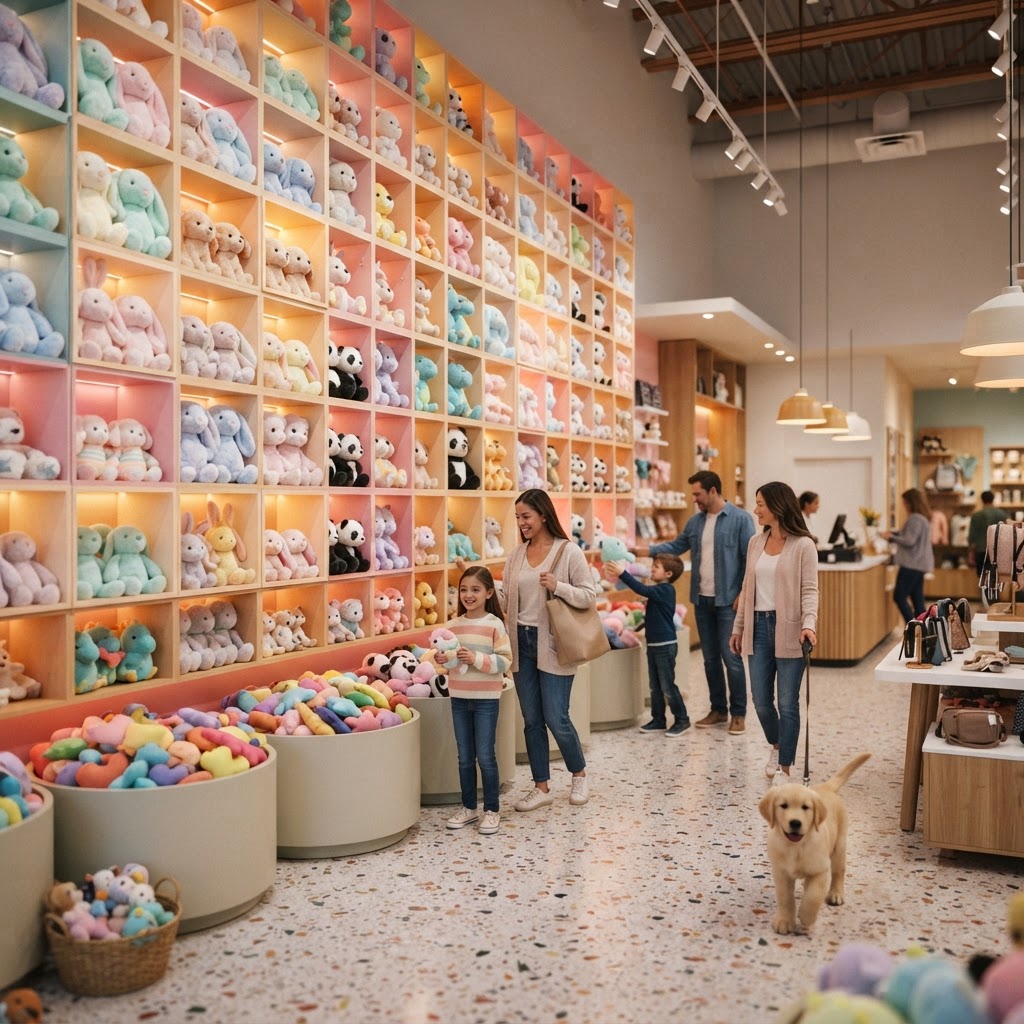
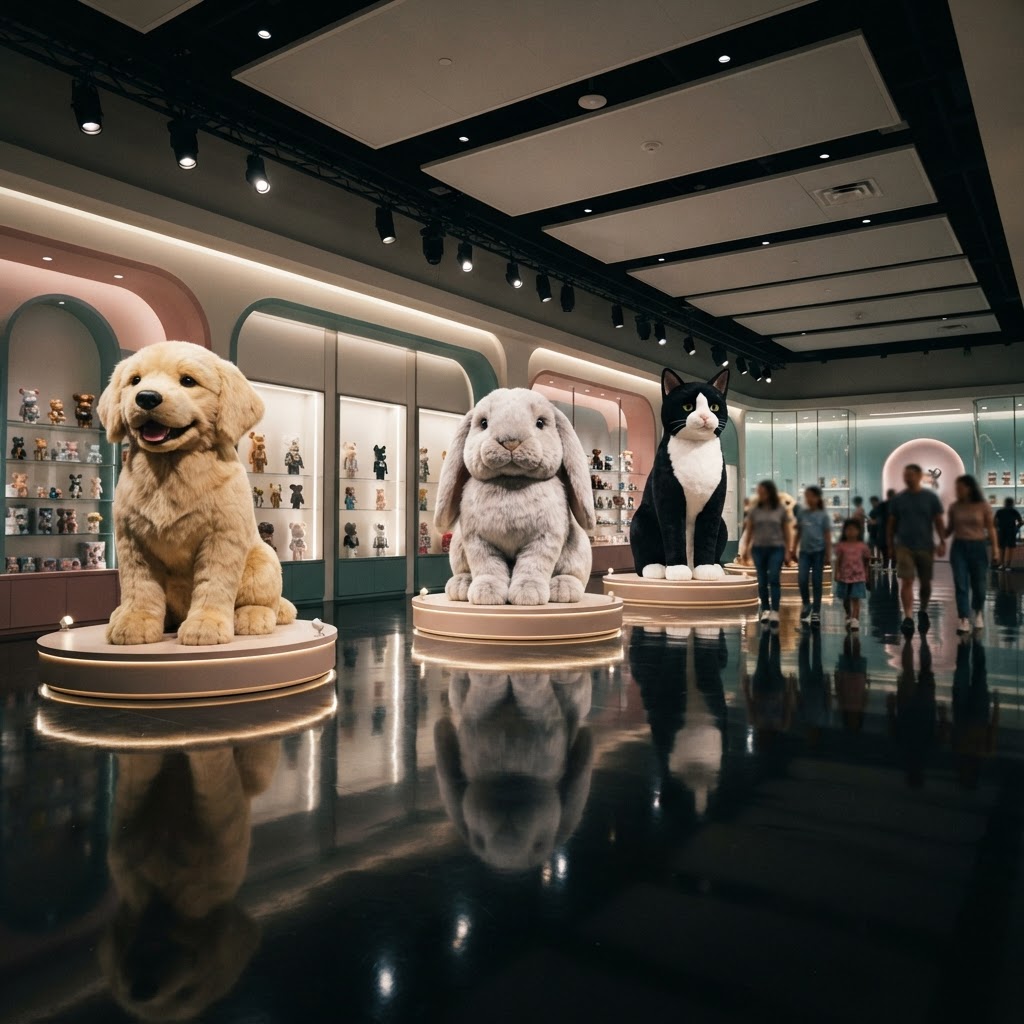
Product showcase · Visual 9
Adopt Me! Merchandise Experience
A dedicated Pet Emporium concept: plush walls, giant collectibles, adoption stations, personalization and park-exclusive collections, each mapped to a monetization lever.
Plush and squishy walls
A full wall of plush and squishy pets at child eye level, priced for an impulse buy on the way out. Density and price laddering turn browsing into volume.
Giant collectible pets
Oversized pets on lit podiums create the photo moment and anchor a premium collectible tier at a materially higher price point.
Pet adoption stations
Guests choose and 'adopt' a pet at a counter, with the adoption record carried into their park profile. The ritual, not the toy, is what they pay for.
Personalization and exclusive collections
Names, accessories and numbered park-exclusive editions add margin per transaction and a reason to buy here rather than online.
Hypothetical concept visualization. Licensed-style pet merchandise would only be produced where merchandising permissions exist; all imagery here is illustrative and no licensed product is represented as approved or available.
10
Section 10
Financial Feasibility & Investment Economics
A full destination theme park represents a fundamentally different investment from an indoor entertainment center.
Roblox World would require substantial capital for land, infrastructure, attractions, water systems, construction, technology and preopening operations.
10.1 Capital Investment · Preliminary Capital Framework
Investment category
Illustrative allocation
Land acquisition and site preparation
$60M
Roller coasters and major attractions
$220M
Water park development
$90M
Racing and interactive attractions
$45M
Buildings, retail and restaurants
$110M
Digital infrastructure and technology
$35M
Engineering, design and professional services
$65M
Contingency and preopening costs
$125M
Total illustrative investment
$750M
Important: This is a conceptual investment scenario, not a construction estimate. It excludes any financing costs or additional infrastructure requirements not captured in the categories above. A feasibility study could produce a materially different figure.
10.2 Operating Scenarios
To evaluate the business, I would develop three attendance scenarios.
For illustration, assume annual recognized revenue per visitor of $115, combining admission and ancillary spending.
Metric
Conservative
Base case
Optimistic
Annual attendance
1.2M
1.8M
2.5M
Revenue per visitor
$115
$115
$115
Annual revenue
$138M
$207M
$287.5M
Illustrative EBITDA margin
15%
25%
30%
Annual EBITDA
$20.7M
$51.8M
$86.3M
Roblox World annual revenue scenarios
Illustrative revenue based on annual attendance and $115 in revenue per visitor.
Conceptual scenarios, not forecasts or verified operating results.
Attendance and per-visitor spending are the two drivers behind these outcomes. Revenue per visitor of $115 compounds with annual attendance, so small shifts in either move the business materially: each additional 100,000 guests at that rate adds roughly $11.5 million in annual revenue.
These are scenario assumptions, not forecasts.
They exclude financing costs, depreciation, taxes and potential corporate-level costs. EBITDA is not free cash flow.
Financial Interpretation
At the illustrative $750 million investment level, the base case would generate approximately $51.8 million in annual EBITDA.
That represents an EBITDA-to-initial-investment ratio of approximately 6.9%.
This is not sufficient evidence of an attractive investment.
The project would require a detailed discounted cash flow analysis incorporating:
Construction timing.
Attendance ramp-up.
Seasonal demand.
Maintenance capital expenditures.
Working capital.
Financing costs.
Taxes.
Long-term attraction replacement.
Terminal value.
CEO Investment Implication
I would not approve a $750 million investment based on the base-case economics above.
Before proceeding, management would need to improve the projected financial performance through some combination of higher attendance, better per-guest economics, lower capital requirements, operating partnerships or phased development.
This is precisely why financial discipline matters in product strategy.
A compelling entertainment concept does not automatically justify its capital requirements.
11
Section 11
Product Roadmap & Development Strategy
Phase 0
Strategic Validation
Proposed duration: 6–9 months
Objectives
Validate consumer demand, business feasibility, creator partnerships and the proposed location.
Key Activities
Conduct customer discovery with Roblox-playing families.
Analyze theme park demand and competitive alternatives.
Proceed only when the company has credible evidence of demand, commercial feasibility and a potential path to acceptable investment returns.
Phase 1
Paid Experience Validation
Proposed duration: 9–15 months
Launch a temporary Roblox World experience through a partnership with an existing entertainment venue.
The pilot could include:
Adopt Me! interactive experiences.
Creator meet-and-greets.
Competitive Roblox-inspired challenges.
Avatar-connected missions.
Licensed merchandise.
A limited number of physical attractions or simulators.
The purpose is to validate customer behavior before committing to permanent infrastructure.
Primary Metrics
Paid attendance.Ticket conversion.Merchandise spending per visitor.Guest satisfaction.Creator event performance.Customer acquisition cost.Contribution margin per guest.
The pilot would not validate the economics of full-scale roller coasters, water parks or resort operations. Those require separate engineering and financial analysis.
Phase 2
Destination Development
Proposed duration: 24–48 months following approval
Following successful validation, begin permanent park development.
Initial Opening Scope
The initial park should include:
Two signature roller coasters.
A dedicated family attraction district.
A racing experience.
CreatorVerse.
Adopt Me! Kingdom.
Retail and dining facilities.
WorldSync infrastructure.
The water park could open in the initial phase or a subsequent construction phase, depending on site infrastructure and financial feasibility.
Development Principle
Build a complete guest experience from day one, while preserving the ability to expand.
Opening with an incomplete park would risk damaging the brand and reducing repeat visitation.
Phase 3
Expansion & Platform Development
Proposed duration: Years 5–8
Potential expansion opportunities:
Additional roller coasters.
Expanded water attractions.
Creator event arena.
On-site hotel.
New licensed gaming districts.
Additional regional locations.
International licensing partnerships.
Expansion decisions would depend on demonstrated financial performance and customer demand.
12
Section 12
Product Metrics & Performance Management
12.1 North Star Metric
Annual Engaged Guests
Definition: Unique guests who complete at least one qualifying interactive experience during a rolling 12-month period.
This metric captures the number of people actively experiencing the differentiated product.
However, it must be evaluated alongside profitability and safety.
12.2 Executive Performance Dashboard
Dimension
Primary KPI
Management objective
Acquisition
Paid attendance
Validate market demand
Engagement
Attractions completed per guest
Measure product participation
Retention
Repeat visitation rate
Establish recurring demand
Monetization
Revenue per guest
Improve unit economics
Profitability
EBITDA and free cash flow
Establish financial sustainability
Merchandise
Merchandise contribution per guest
Validate retail economics
Creator ecosystem
Creator-attributed attendance
Measure partnership value
Digital integration
WorldSync activation rate
Evaluate ecosystem connectivity
Operations
Attraction uptime
Maintain reliable experiences
Safety
Severity-weighted incident rate
Protect guests and employees
Customer experience
NPS and satisfaction
Monitor guest value
12.3 Key Product Experiments
Experiment A
Digital Identity Integration
Hypothesis
Guests who connect their Roblox accounts will participate in more interactive experiences.
Test
Randomized encouragement to activate WorldSync, where appropriate and with parental consent.
Primary metric
Interactive experiences completed per guest.
Guardrails
Privacy complaints, onboarding friction and guest satisfaction.
Experiment B
Creator-Led Events
Hypothesis
Creator events will generate incremental visits and higher merchandise spending.
Test
Compare event periods with matched non-event periods while controlling for seasonality and promotions.
Primary metric
Incremental contribution profit attributable to the event.
Experiment C
Adopt Me! Merchandise
Hypothesis
Interactive pet adoption will increase merchandise conversion compared with traditional retail presentation.
Test
Compare eligible merchandise categories across controlled retail experiences.
Primary metric
Contribution profit per eligible store visitor.
Experiment D
Water Park Bundling
Hypothesis
Bundled admission will increase total contribution without excessively reducing single-park revenue.
Test
Evaluate alternative ticket packages through controlled pricing research and limited market tests.
Primary metric
Contribution margin per booking.
13
Section 13
Competitive Strategy & Defensibility
13.1 Competitive Landscape
Roblox World would compete with multiple entertainment categories.
Traditional Destination Parks
Walt Disney Parks and Resorts and Universal Destinations & Experiences compete through recognizable IP, large-scale attractions and destination hospitality.
Regional Amusement Parks
Regional operators compete through ride portfolios, accessibility and repeat local visitation.
Family Entertainment Centers
Indoor entertainment venues compete through convenience, shorter visits and lower total trip costs.
Gaming & Esports Events
Gaming conventions and live events compete for the attention of digitally engaged audiences.
13.2 Strategic Differentiation
Roblox World would compete across five dimensions.
Strategic capability
Proposed advantage
Gaming-native IP
Experiences familiar to existing Roblox audiences
Creator participation
Access to evolving creator-developed content
Physical attractions
Full-scale rides and water entertainment
Persistent digital identity
Connection between park experiences and Roblox
Content adaptability
Modular experiences and recurring creator events
13.3 Long-Term Competitive Moat
The strongest defensibility would come from the combination of:
The integrated ecosystem would be more difficult to reproduce.
However, Roblox would need to build expertise in physical entertainment operations, where it does not have the same established capabilities as experienced theme park operators.
14
Section 14
Risk Assessment & Mitigation
Risk
Severity
Mitigation strategy
Capital overruns
Critical
Stage-gated approvals, independent cost reviews
Weak attendance
Critical
Paid demand validation and conservative forecasting
Ride safety
Critical
Certified engineering, independent inspections
Child protection
Critical
Privacy-by-design and supervised interactions
IP licensing disputes
High
Formal creator and rights-holder agreements
Extreme weather
High
Climate-responsive design and operating plans
Technology failures
High
Offline fallback systems and operational separation
Merchandise inventory risk
Medium
Demand forecasting and controlled product launches
Creator reputation issues
High
Partner due diligence and contractual safeguards
Attraction obsolescence
High
Modular content and planned reinvestment
Construction delays
High
Experienced development partners and contingency
Water and energy requirements
High
Site-specific resource and sustainability analysis
Critical Strategic Risk
The greatest risk is assuming digital popularity guarantees physical attendance.
Roblox's online scale is an advantage in awareness and distribution, but it does not establish willingness to pay for travel, accommodation and theme park admission.
The investment case must be supported by independently validated consumer demand.
15
Section 15
Operating Model & Strategic Partnerships
15.1 Recommended Operating Structure
I would not recommend that Roblox independently build an entire theme park operating organization from scratch.
Instead, Roblox should establish a dedicated venture supported by experienced development and operating partners.
Roblox Responsibilities
Brand and product strategy.
Digital platform integration.
Creator ecosystem management.
IP licensing coordination.
Digital experience development.
Customer experience standards.
Data governance and platform safety.
Operating Partner Responsibilities
Park construction and engineering.
Ride operations.
Maintenance.
Food and beverage operations.
Staffing and training.
Physical security.
Regulatory compliance.
Facilities management.
Joint Responsibilities
Capital planning.
Attraction portfolio decisions.
Revenue management.
Marketing.
Safety governance.
Guest experience.
Expansion decisions.
15.2 Governance
A joint steering committee should oversee strategic decisions.
However, physical safety authority must remain with qualified operating and engineering professionals, independent of commercial pressure.
Executive Decision Rights
Decision
Accountable function
Product vision
Roblox executive leadership
Capital allocation
Board / investment committee
Physical attraction safety
Certified operating and engineering authorities
Creator licensing
Roblox partnerships and legal
Digital integration
Roblox product and engineering
Daily park operations
Operating partner
Financial performance
Joint venture management
Expansion approval
Board / investment committee
16
Section 16
Executive Decision Framework
Investment Gate 101
Market Validation
Is there sufficient willingness to pay for Roblox-branded physical entertainment?
Required evidence:
Customer research.
Paid pilot performance.
Attendance modeling.
Pricing validation.
Competitive analysis.
Investment Gate 202
Commercial Feasibility
Can Roblox World generate attractive financial returns?
Required evidence:
Independent construction estimates.
Site feasibility.
Operating cost forecasts.
Licensing agreements.
Scenario-based financial modeling.
Risk-adjusted return analysis.
Investment Gate 303
Development Approval
Can the project be delivered safely, on time and within an acceptable capital budget?
Required evidence:
Site control.
Regulatory feasibility.
Engineering plans.
Operating partner agreements.
Funding commitments.
Construction schedule.
Safety management framework.
Investment Gate 404
Expansion
Has the operating business demonstrated sustainable demand and profitability?
Required evidence:
Repeat visitation.
Positive operating cash flow.
Customer satisfaction.
Proven attraction reliability.
Stable merchandise economics.
Demonstrated creator-event performance.
17
Section 17
Strategic Recommendation
CEO Decision: Conditional Approval for Feasibility Development
Recommended Market
Dallas–Fort Worth, Texas
Secondary Market
Las Vegas, Nevada
Recommended Product
A full-scale, creator-powered Roblox destination combining:
Major roller coasters.Water park attractions.Competitive racing.Adopt Me! family experiences.CreatorVerse.Exclusive licensed merchandise.Influencer events.Digital-to-physical identity integration.
Recommended Investment Approach
Authorize a limited feasibility and validation program.
Do not approve full-scale construction until the company demonstrates a credible path to attractive risk-adjusted returns.
Strategic Rationale
The opportunity is compelling because Roblox has an established digital ecosystem, recognizable gaming experiences and a large creator community.
However, the physical entertainment industry requires different capabilities, capital commitments and risk management.
The recommended strategy preserves the upside of the concept while limiting premature financial exposure.
18
Section 18
Key Learnings & Strategic Implications
01
Product-Market Fit Must Be Revalidated Across Industries
Strong engagement in digital entertainment does not automatically establish demand for physical entertainment.
The company must validate the new customer behavior independently.
02
Differentiation Must Extend Beyond Branding
A theme park featuring Roblox logos and generic rides would not establish a sustainable competitive advantage.
The product must integrate recognizable gaming experiences, creator participation and interactive engagement.
03
Physical Attractions Remain Essential
Roller coasters, water slides and racing attractions provide tangible entertainment value.
Digital features should enhance these experiences, not substitute for them.
A structured creator partnership program could provide an evolving portfolio of experiences and merchandise opportunities.
This would require disciplined licensing, quality control and revenue-sharing agreements.
05
Capital Allocation Is a Product Decision
The most important executive decision is not which attraction to build first.
It is determining how much capital to commit, what evidence is required and when the company should expand or stop.
06
The Long-Term Opportunity Is an Ecosystem
The potential value extends beyond admission revenue.
A successful Roblox World could establish new commercial relationships between creators, players, physical entertainment operators and merchandise partners.
Final Investment Thesis
Roblox World™ represents an opportunity to extend Roblox from a digital gaming platform into a new category of physical entertainment.
By combining major amusement attractions, creator-developed experiences, licensed merchandise and persistent digital engagement, the proposed destination could establish a differentiated position in the global theme park industry.
The opportunity is supported by Roblox's existing brand and creator ecosystem, but success depends on validating physical attendance demand, developing operational expertise and achieving attractive risk-adjusted financial returns.
The recommended strategy is to validate demand, establish strategic operating partnerships and pursue a phased destination development in Dallas–Fort Worth, with Las Vegas retained as a secondary candidate.
19
Portfolio presentation
Portfolio Presentation: Executive Summary
For a Senior Product Manager, Director of Product or VP Product portfolio, I would distill the case study into the following executive scorecard.
Dimension
Strategic decision
Business problem
Roblox's digital engagement has limited direct connection to physical destination entertainment
Market opportunity
Gaming-native entertainment for Gen Z, Gen Alpha and families
Product vision
Creator-powered theme park ecosystem
Core differentiator
Physical attractions connected to Roblox games, creators and digital identities
Primary customers
Families with Roblox-playing children, teens and young adults
Product strategy
Major rides + water attractions + creator experiences + merchandise
Business model
Admission, retail, food, events and hospitality
Location strategy
Dallas–Fort Worth first; Las Vegas alternative
Execution strategy
Validate demand → paid pilot → feasibility → phased construction
North Star
Annual Engaged Guests
Financial discipline
Stage-gated investment and risk-adjusted returns
Major risks
Capital intensity, attendance uncertainty, safety and licensing
Final recommendation
Conditional approval for feasibility development
Roblox World™ | Reimagining Theme Parks for the Gaming Generation
An executive-level product strategy exploring how Roblox could transform its digital creator ecosystem into a multigenerational physical entertainment destination, integrating major attractions, gaming-native intellectual property, creator partnerships and new revenue streams.
Case Study Classification: Independent, hypothetical product strategy. All proposed attractions, financial projections, locations, partnerships and product names are conceptual and do not represent official Roblox plans or commitments.
This distinction is important for a professional portfolio: the case study demonstrates strategic thinking, product leadership and investment judgment without misrepresenting hypothetical work as a delivered product.
Discuss the investment thesis
Book a call to walk through the feasibility gates, capital framework and physical entertainment operating model.